Source: https://kotaku.com/sakuna-of-rice-and-ruin-nintendo-switch-ps4-japanese-s-1848767765
Transcipt in case you don't want to click on offsite links:
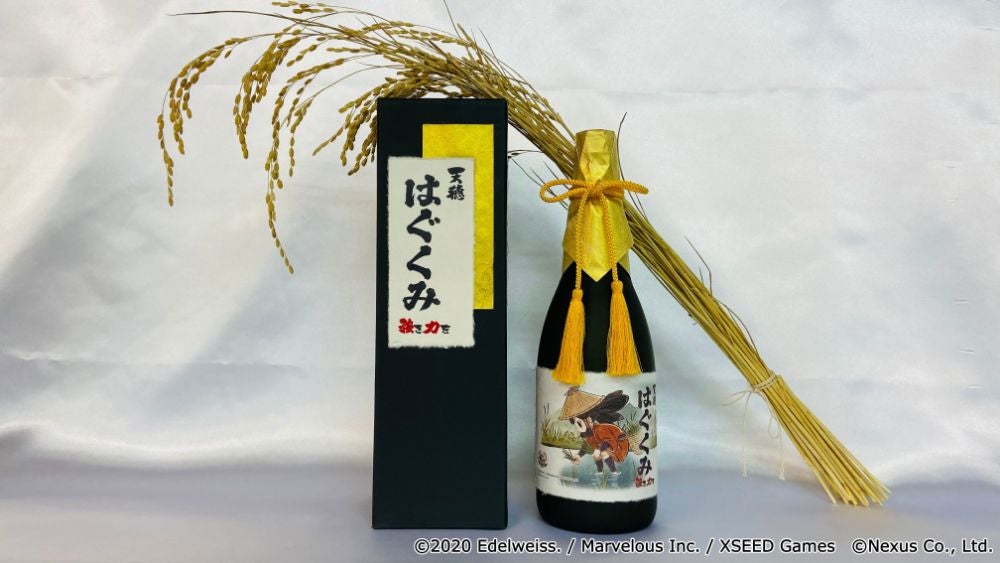
In the past few years, there has been a small, yet increasing number of gaming-themed sakes. A handful of sake breweries have embraced video games to sell their booze. The latest? The Nakagawa Shuzo sake brewery in Tottori, Japan.
Nakagawa Shuzo has teamed up with Sakuna: Of Rice and Ruin—which Kotaku’s Ethan Gach called one of 2020's best JRPGs—for a special release. It’s one of the smartest sake collabs to date.
In Sakuna: Of Rice and Ruin, you are tasked with working when not defeating demons. In the game, rice is incredibly important. (Since sake is made from rice, the crop is obviously important in brewing the drink, too!) The game has a rather in-depth rice farming simulator, and rice is Sakuna’s main source of power.
Sake can also be made in Sakuna, including a spread of different kinds ranging from ancient styles of sake like doburoku (unfiltered sake) to premium daiginjo sake. You can even earn a trophy for making a meal that consists of nothing but the Japanese drink!

So, a Sakuna: Of Rice and Ruin branded sake makes total sense! This doesn’t feel like some superficial collab. What’s more, the sake uses Goriki rice, which was developed in Tottori over a hundred years ago. Goriki (強力) literally means “powerful,” which lines up thematically with Sakuna’s “rice is power” tagline.
Priced at 4,367 yen ($35), the Sakuna sake is a premium daiginjo, which means that at least half of the rice’s outer layers has been polished away. For this sake, the polishing ratio is actually 40 percent, meaning that even more of the outer layers have been removed. If the rice is heavily polished, then typically (but not always!), the result can be a fruity and floral sake. If less of the grain is removed and the polishing ratio is high, the result is often sake with more body and robust flavors. Both styles can be delicious.
 Wolf Link 🐺
lemmy.world
justlookingfordragon@lemmy.world