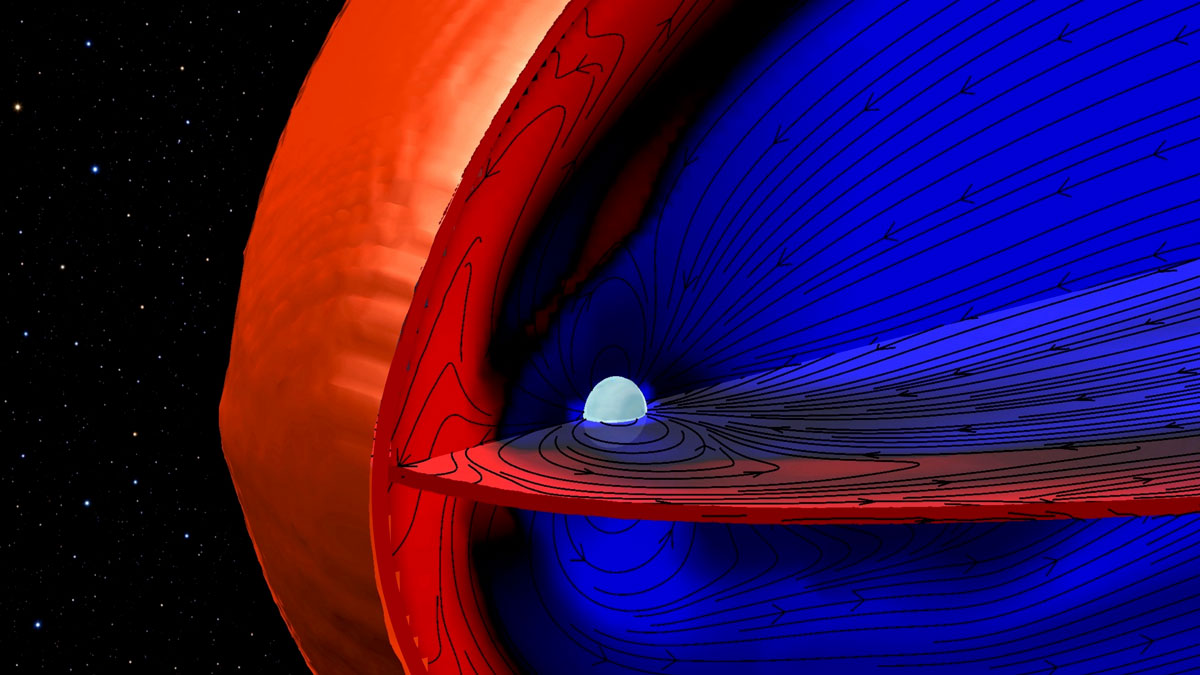
Getting to Know Uranus’s “Breathing” Bow Shock - Eos
| Post Reply | RetroFed Forums Forum Index » Physics |
| Author | Message | ||
|---|---|---|---|
|
supersquirrel sopuli.xyz supersquirrel@sopuli.xyz Joined: 2023-12-09 |
link to open access paper https://agupubs.onlinelibrary.wiley.com/doi/10.1029/2026AV002307 https://en.wikipedia.org/wiki/Bow_shock |
||
| 7 Original | |||
| Post Reply | Page 1 |
Powered by RetroFed · PieBB frontend
· All times are Europe/Amsterdam