| Post Reply | RetroFed Forum Forum Index » Nudibranchs |
| Author | Message | ||
|---|---|---|---|
 quinacridone
mander.xyz
quinacridone@mander.xyz Joined: 2024-03-29 |
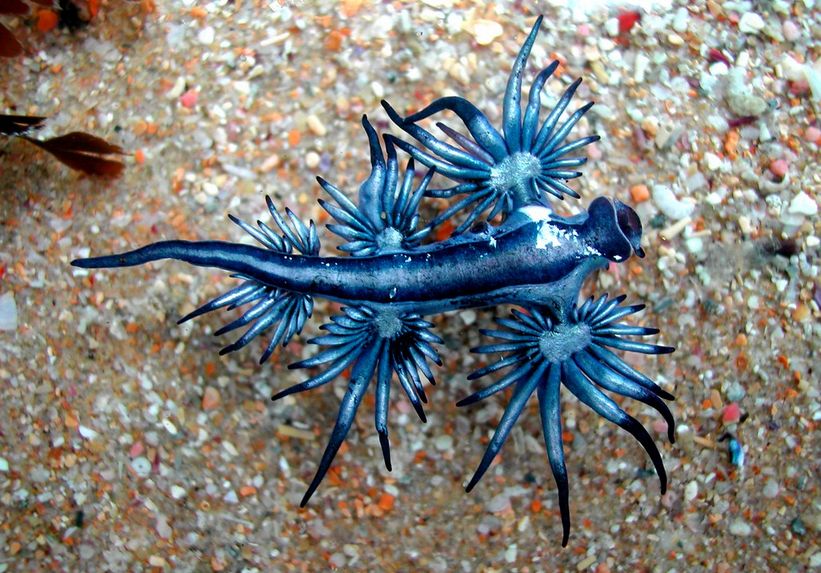
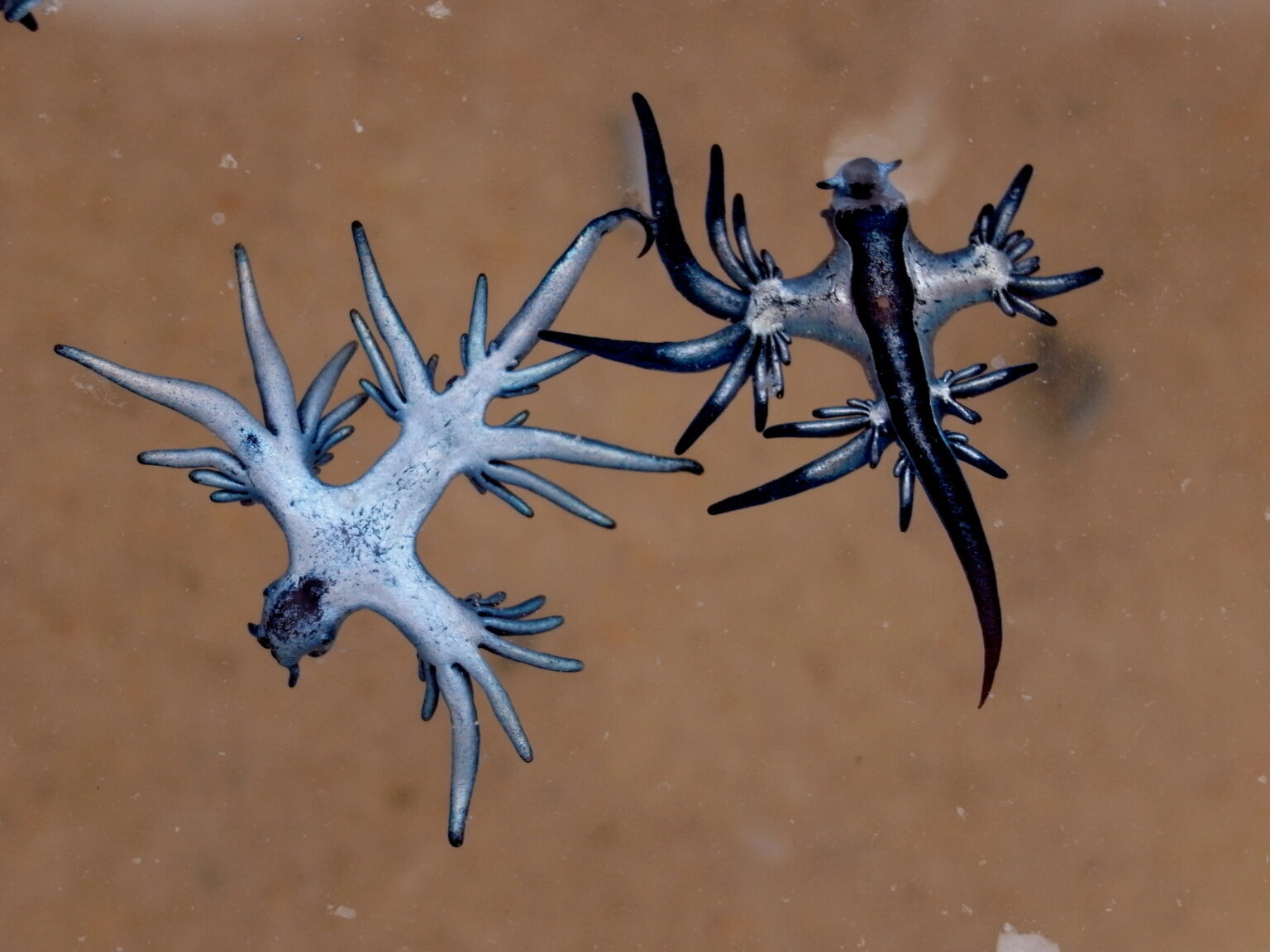
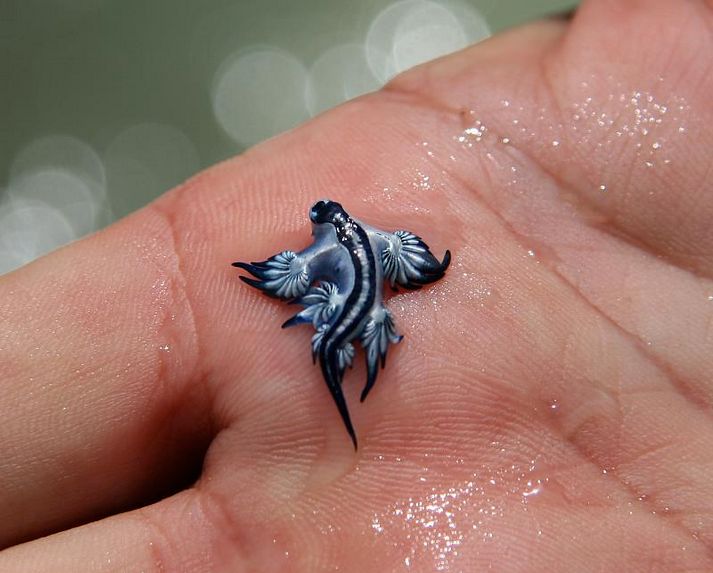
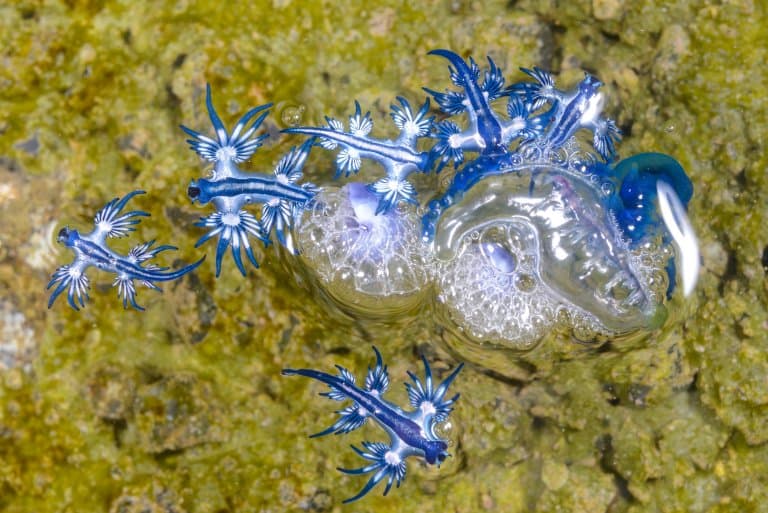
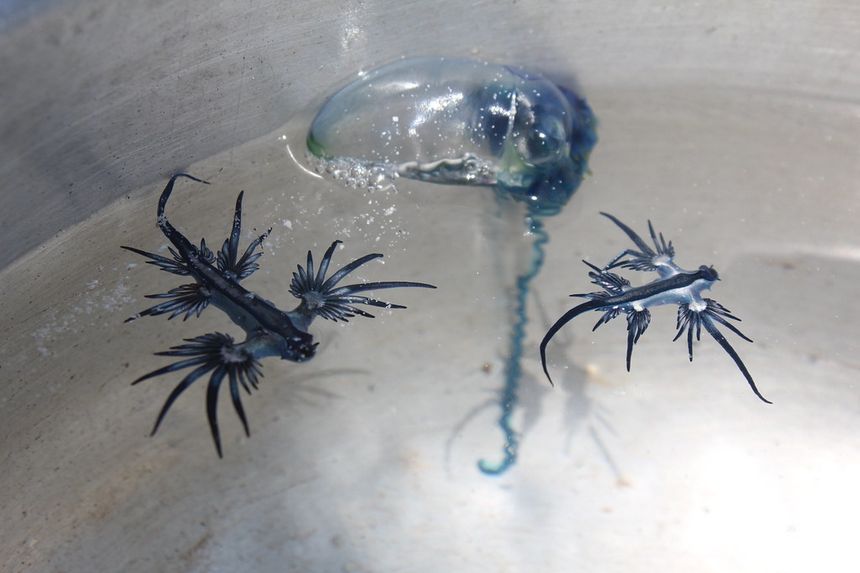
Main Photo by paulhypnos Meet the deeply fabulous Blue Glaucus, or Glaucus atlanticus... aka Blue Dragon, Sea Swallow, Blue Angel, Blue Sea Slug, Blue Ocean Slug and Lizard Nudibranch!
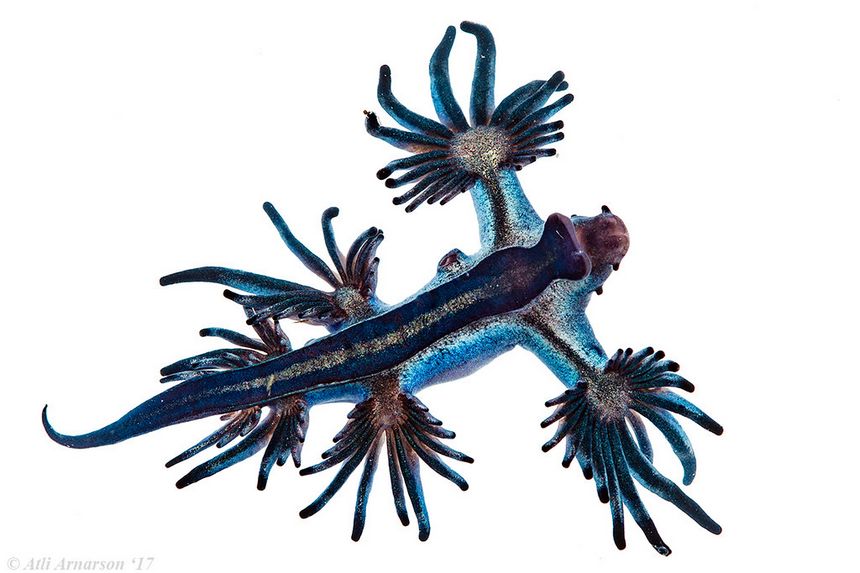
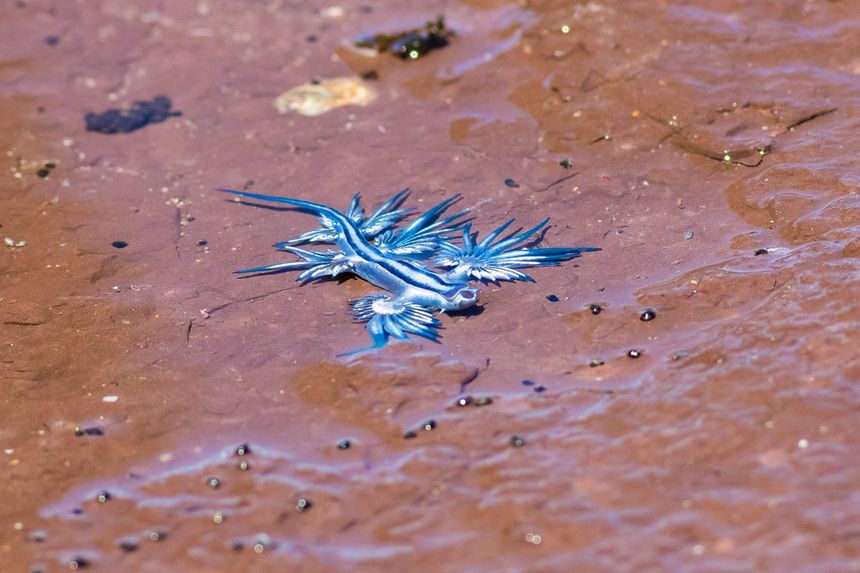
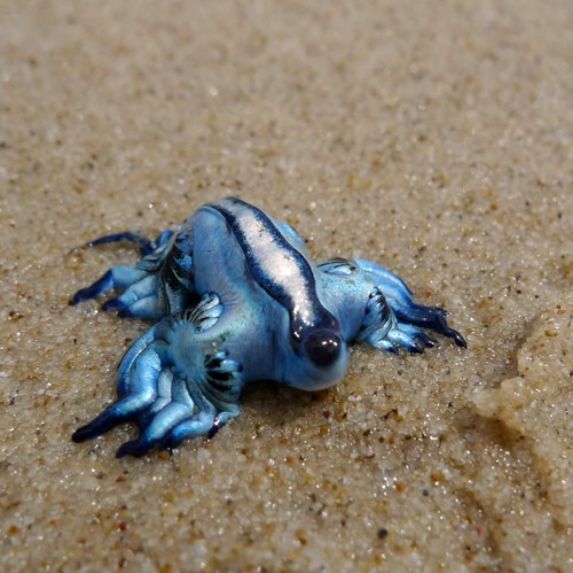
Photo by Atli Arnarson They free float (upside down) and drift in currents by swallowing air bubbles and storing them in a gas-filled sac to maintain buoyancy! As they drift in the ocean currents they are vulnerable to being washed up on beaches after storms...
Photo by M Hooper
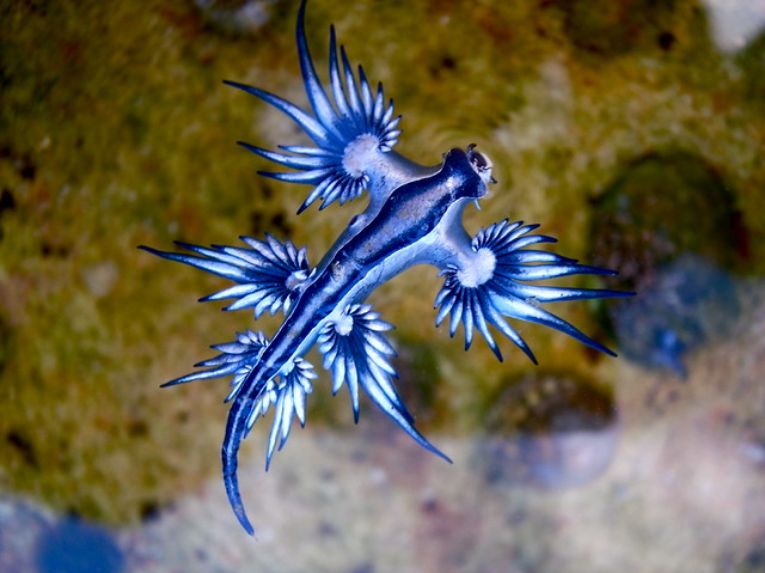
Photo by csm2mk RTW They are found in temperate and tropical ocean waters worldwide, specifically the Atlantic, Pacific, and Indian oceans! It's beautiful colouring help them to camouflage with the ocean and sky! Their body has a form of coloration known as countershading. The dorsal side (facing downward) is silvery grey, camouflaging it against the seas bright surface. While the ventral area (facing upwards) is dark and pale blue, and its head is covered with dark blue stripes, camouflaging against the seas blue colour!
Photo found here This combination of colours and the countershading on its body gives it protection from predators above and below! They grow to around 3cm when mature, and live between 1 month to up to a year! Always a good idea to handle a poisonous creature! Photo by Zekoo1 Their bodies are flattened, and tapered and sport six appendages that branch out into 84 finger-like cerata.
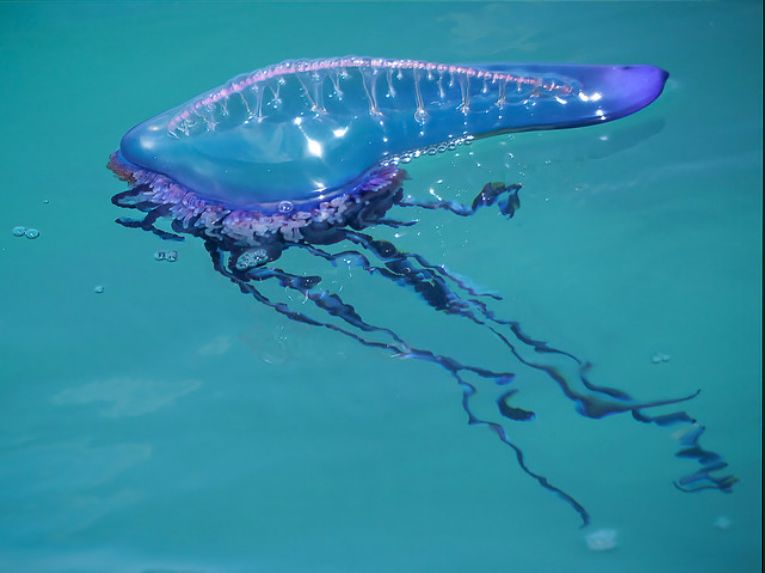
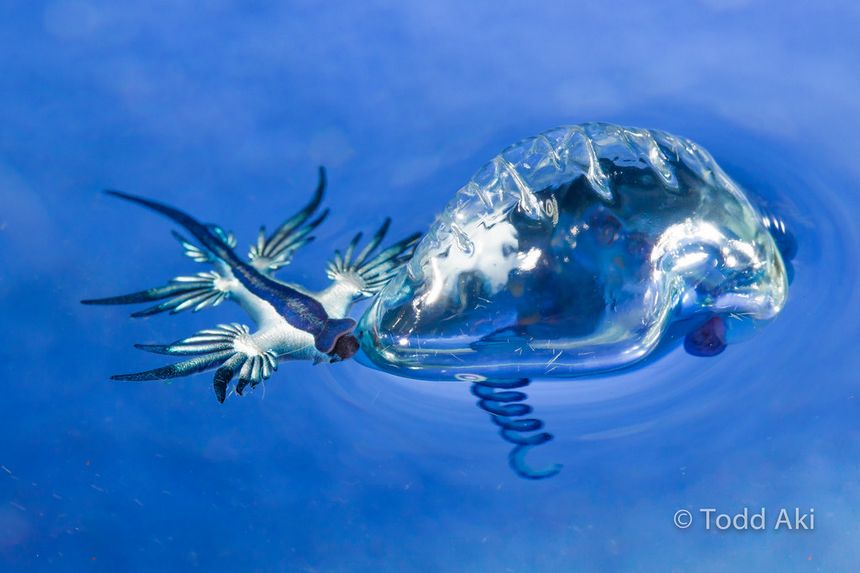
Photo by Sylke Rohrlach They are voracious predators, their favoured prey is the Portuguese man o’ war. This looks like a jellyfish, but is actually a cnidarian and has numerous stinging cells (nematocysts) in its tentacles
Portuguese man o' war (Physalia physalis They transfer undigested nematocysts (stinging cells) from their prey to the cerata to use them to sting when hunting, or if it feels threatened! Sexual reproduction could be problematic for a creature with a deadly sting....Fortunately, they have long, curved S-shape bends in their penises to avoid injury! Blue Glaucus Party!! Photo found here They lay strings of 12-20 eggs, which they deposit on the carcasses of their prey, or left on any other floating mass they encounter!
Photo by Todd Aki As well as the Portuguese man o' war, they will also eat by-the-wind-sailor velella, the Blue Button, and the violet snail.... as well as each other!
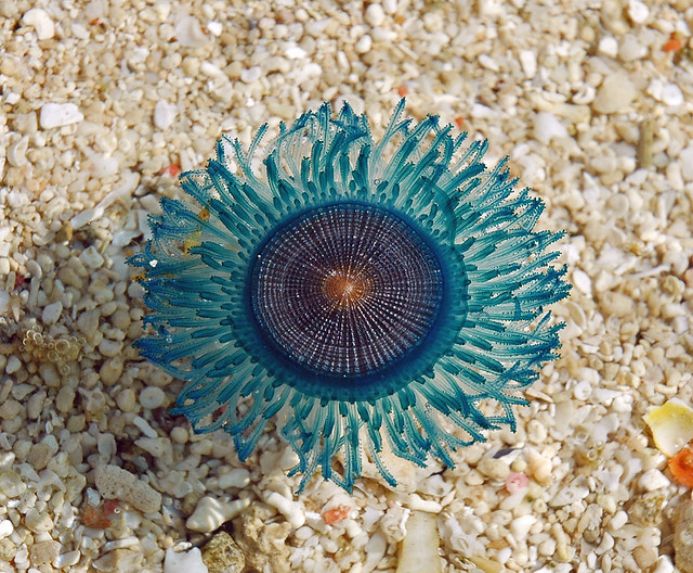
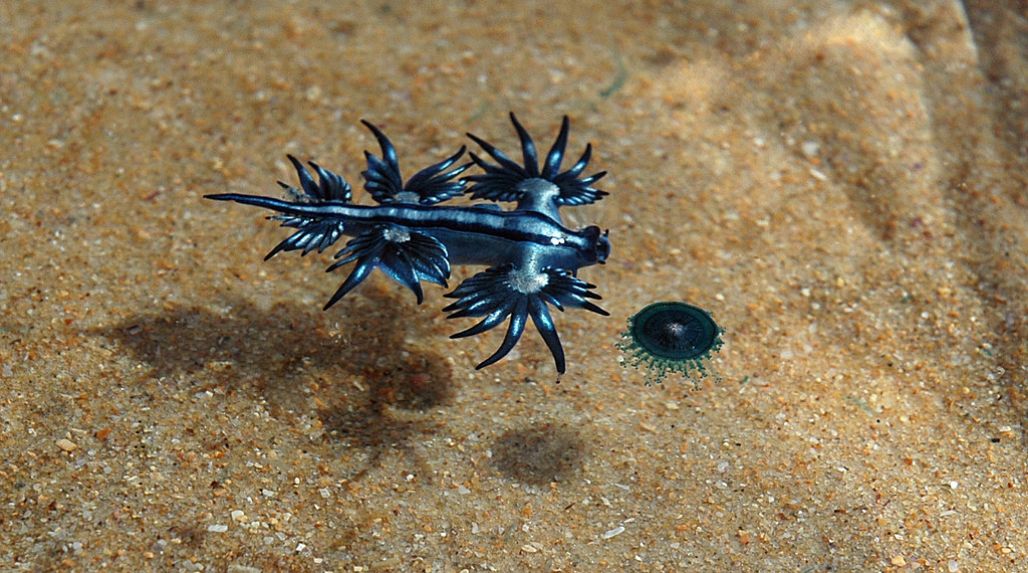
Porpita porpita- Blue Button Stalking a Blue Button.... Photo by paulhypnos Apart from cannibalism, the Loggerhead Sea Turtle is one of the main predators of the Blue Glaucus. Dinner...... Photo by J_turner6 Info via American Ocean and Treehugger |
||
| 1 Original | |||
| Post Reply |
Back to top |