| Post Reply | RetroFed Forum Forum Index » Invertebrates |
| Author | Message | ||
|---|---|---|---|
 quinacridone
lemmy.ml
quinacridone@lemmy.ml Joined: 2022-01-16 |
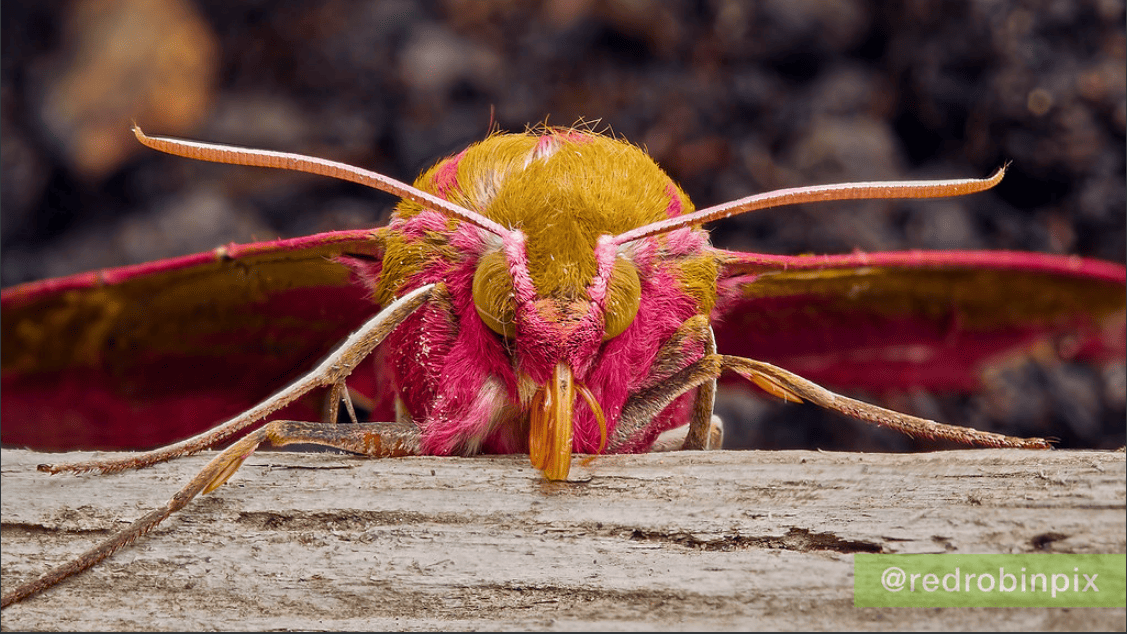
Title photo by Robin Procter It is one of the most common hawk moths in the UK and Europe It gets its name as the caterpillar is said to resemble an elephants trunk
Above photo by Pete Hawkins showing the brown variation of caterpillar It is one of the most colourful moths sharing the same colouration with the smaller Small Elephant Hawk Moth
Above photo of Large and Small Elephant Hawk Moths from here
Above photo by Heath McDonald Its caterpillars feed on the leaves of willow-herbs, fuchsia and bedstraw. The adults are nocturnal feeders of flowers that open, or produce nectar at night. It can hover whilst feeding
Above photo by Rolf Nagel There is usually only a single generation in a year, although occasionally there may be small second generation recorded in the south The female moth release a sex pheromones in order to attract a mate
Above photo by Richard Collier
Above photo by Pablo Martinez-Darve Sanz After successfully mating the female lays eggs either singly, or in pairs on their preferred food plants (willow herb, bed straw, and some garden plants like
Above photo by Wolfgang Burens The young caterpillars start off as yellowish white to green, then changing to a brown-gray colour with black dots along the length of the body when they have finished growing. There is often a green version of the full grown caterpillar. They reach approximately 3 inches long
Above photo by Barry Forbes
Above photo by Nigel Pugh
Above photo by Beate It takes about 27 days for the caterpillar to be ready to pupate. They find a secure spot usually at the base of a plant in debris, or underneath the ground. They then overwinter as a pupae!
Above photo by Roger Wasley
Above photo by Richard Collier
Above photo by David All information via wikipedia |
||
| 1 Original | |||


| Post Reply |
Back to top |